
A few weeks after my walk in the snow, I was back in Delémont, this time to make a start on the Chemin de Jura. The town was quite different from my previous visit: there was no snow on the ground, and the early morning not quite so dark, even though the time was the same.
Delémont was under a blanket of mist when I arrived. But I never let that put me off, so I made my way out of town. Delémont is an old town; evidence of settlement there has been found going back to the bronze age. Its first mention as a town was in the eighth century, when it is listed in local records as Delemonte. Exactly where the name came from is unclear, but it is suspected to be a combination of Germanic and Latin words. It came under the governance of the Prince-Bishop of Basel for a time, until that worthy gentleman lost his power and influence when Basel joined the Swiss confederacy at the start of the sixteenth century. Delémont was then effectively an independent municipality, though still with strong ecclesiastical influence. The town was occupied by the French during the Napoleonic Wars and became the seat of administration for the local district. At the Congress of Vienna, the entire region was given to the canton of Bern. It remained like that until, after much agitation, and a certain amount of violence, Jura became a canton in its own right, with Delémont as its administrative centre.
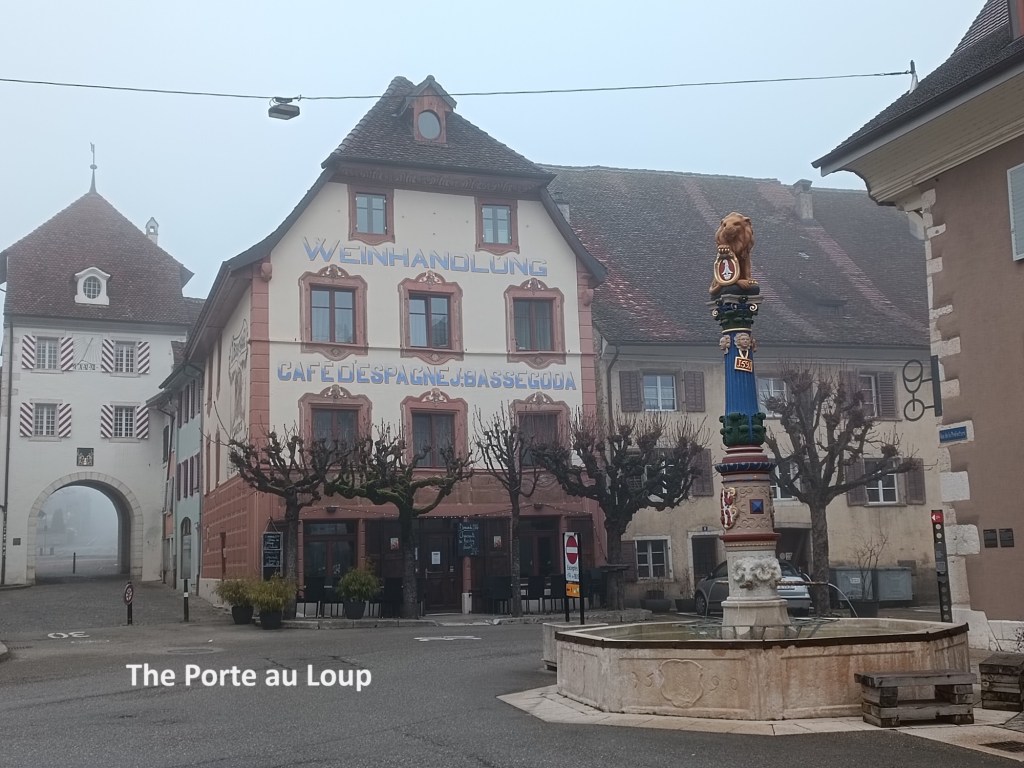
Delémont remains a small town, and I was soon making my way out through the Porte au Loup. The name suggests that it has a connection with wolves, but in fact, the town gate is named after a gentleman called Ruelin Loup who lived in the adjacent building towards the end of the fourteenth century. The gate dates from around that time, and has been renovated or rebuild twice, first in 1775, and most recently in 1972. Going through the gate, I felt that I had left the city behind, but I still had to go through some residential areas before I was truly out in the countryside.


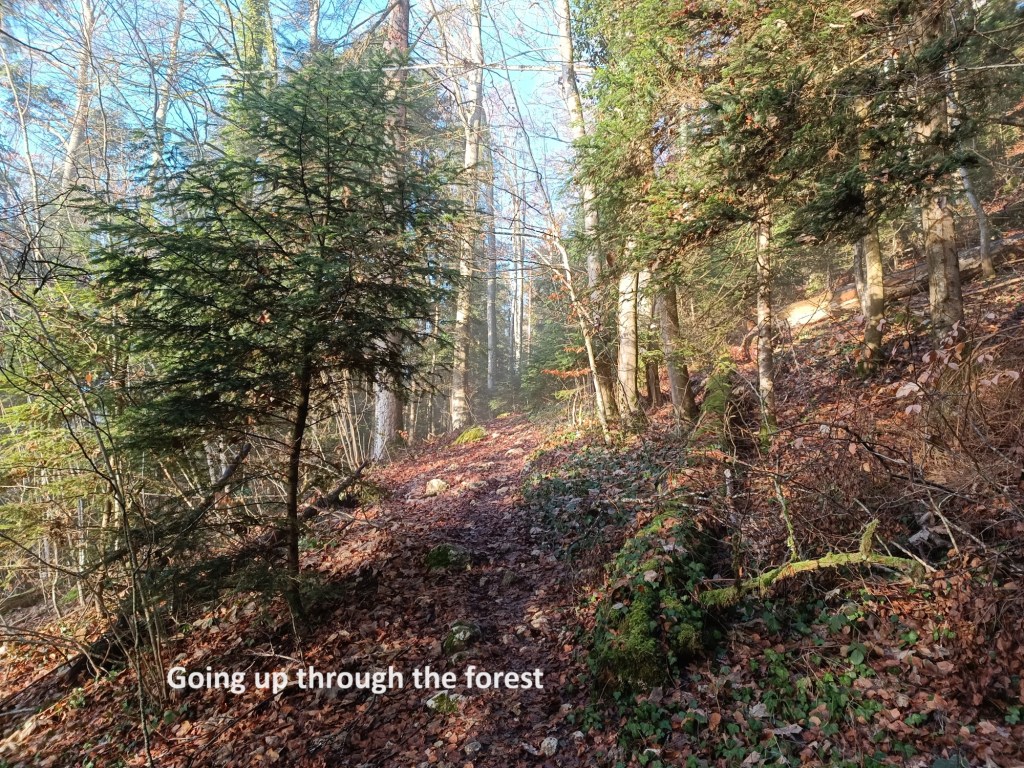
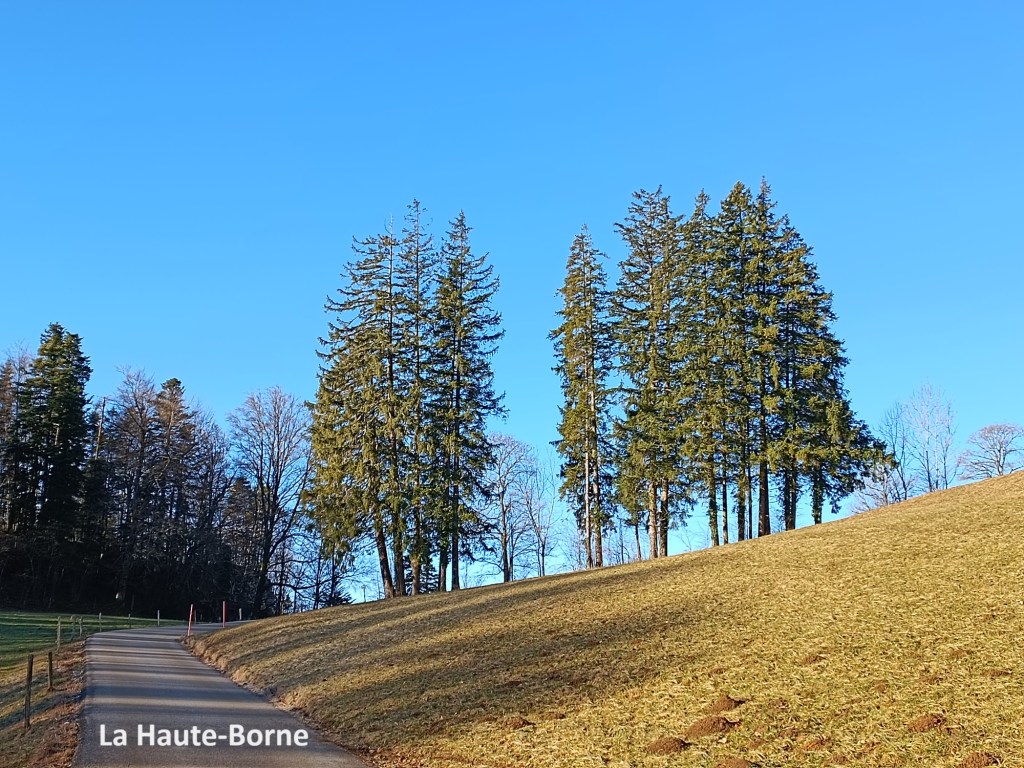
My route took me on up through the mist At Le Bambois, I seemed to be following a tree-lined avenue upwards through a landscape covered in grey. In the forest at Les Cotattes, it was the same, but as I came closer to the upper edge of the forest at La Haute-Borne, there were patches of blue sky breaking through. At La Haute-Borne itself, I was completely clear of the mist, and enjoying sunshine and blue skies. As I went on towards Le Sommet, I found myself looking down on a sea of mist in the valleys below. I have no doubt that at least people down there were complaining of the cold and grey, not realising that there was bright sunshine on the higher ground.


I made a navigational error at Le Sommet, though it turned out well. As I approached the road junction, I could see what looked like a marker in the field opposite, and the trail was clearly heading towards the hill beyond. I crossed the field, which I should not have done, and only realised my error when I reached the marker. Luckily, in this earliest of springtime, the field was not in use, and I could cut across to rejoin the trail as it went westward along the northern edge of the field.
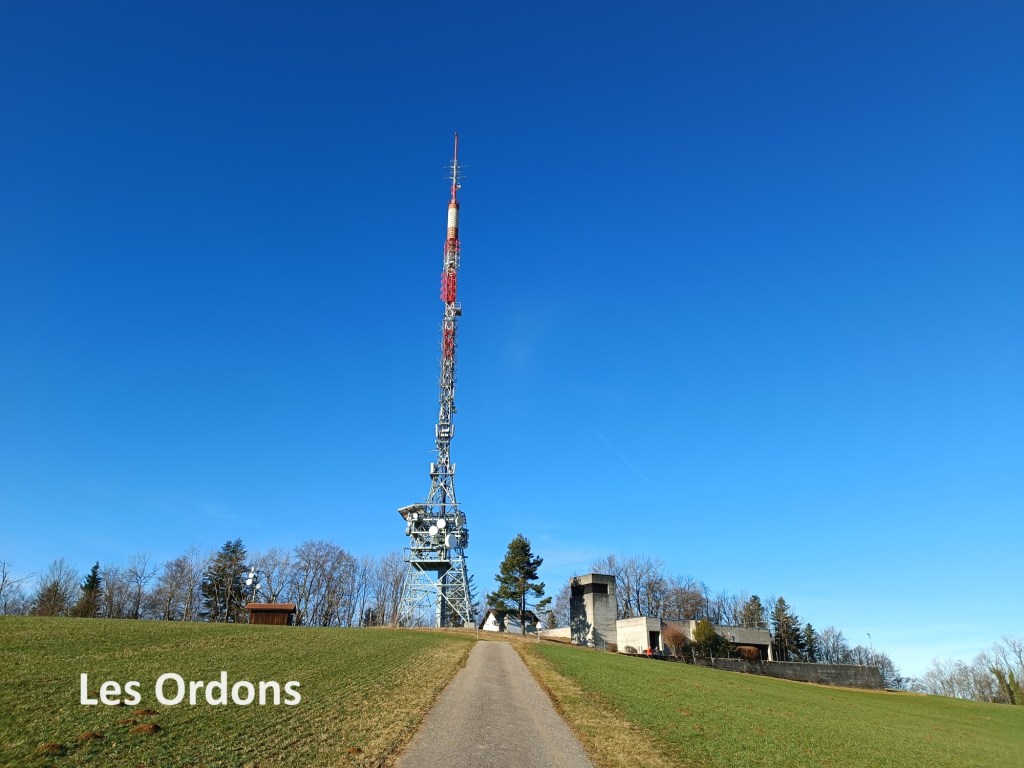
After that, it was a steady ascent to the hill at Les Ordons. After Les Côtes, the trail goes off to the right, and does not actually go to the top of the hill. However, I could see a walker ahead of me following the road directly to the tom, so I did the same. There is a large transmission tower at the top, and somewhere in among all the equipment is a webcam that provides sweeping views of the surrounding countryside. I was happy just to look back at the route that I had come.
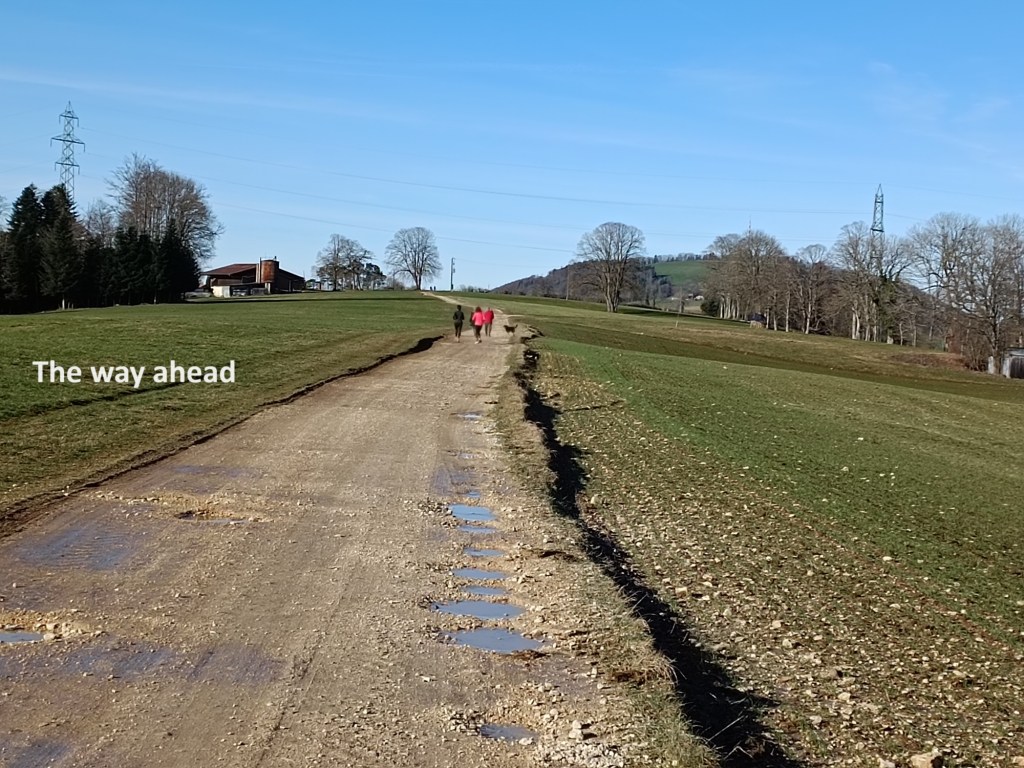
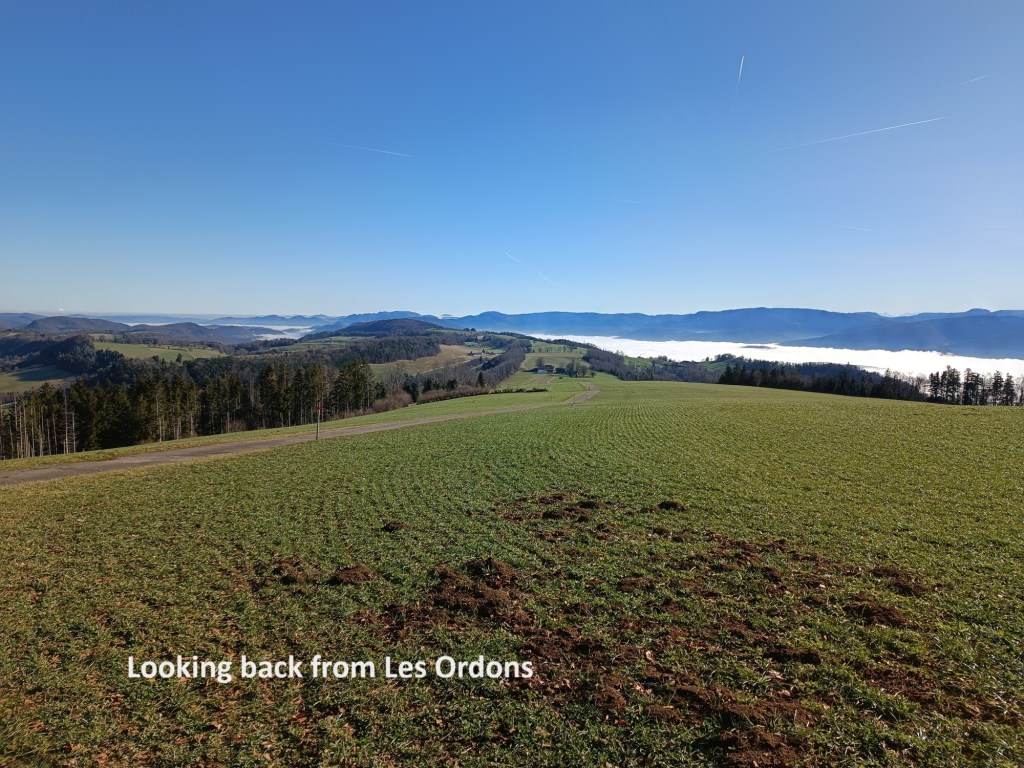

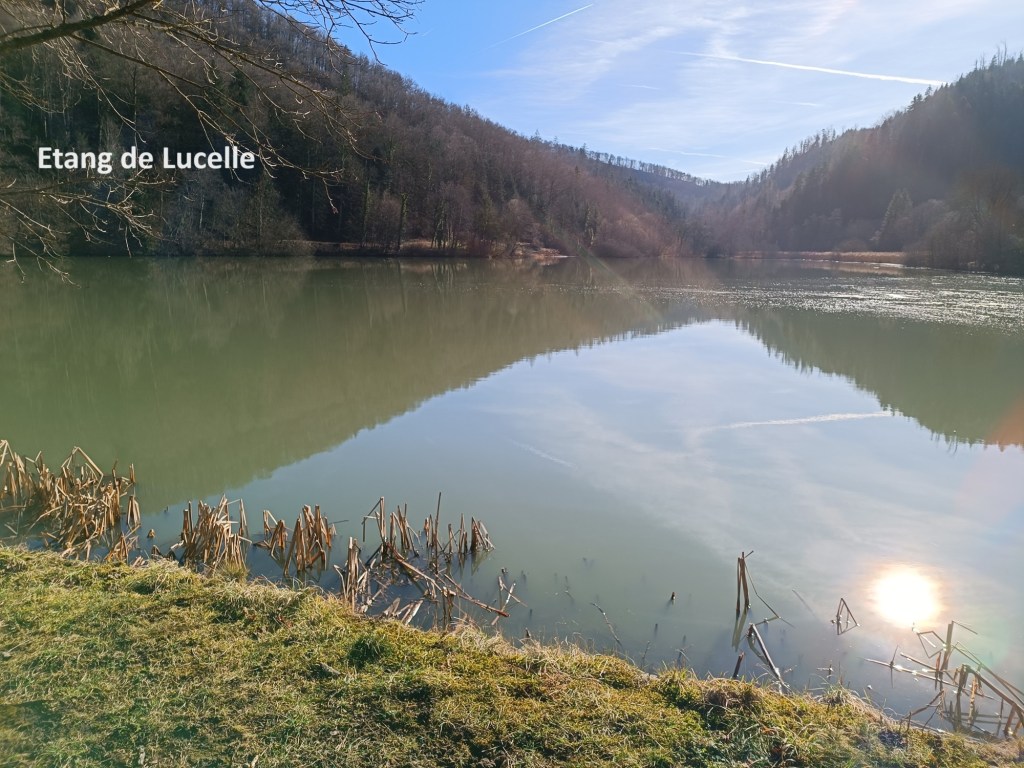
After that, it was nearly all downhill. At times, the route gave great views to the north and west; at other times, it was in the forest. IN either case, it went steadily on down until I reached the road. There was a short stretch along that road before turning off to go along the lakeshore of the Etang de Lucelle. This little lake is artificial, having been created in the twelfth century. Over the centuries since then, it has become part of the natural landscape. Some of the pictures of the lake on the internet show an expanse of pristine water, but when I arrived, it looked green, murky, and distinctly uninviting.
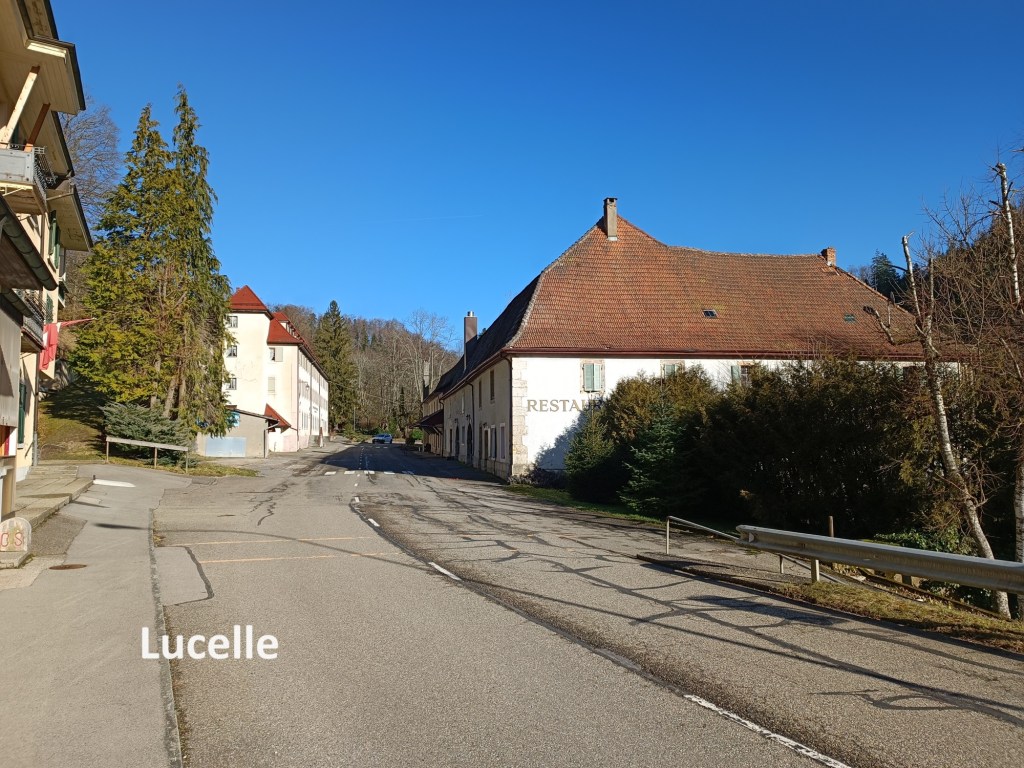
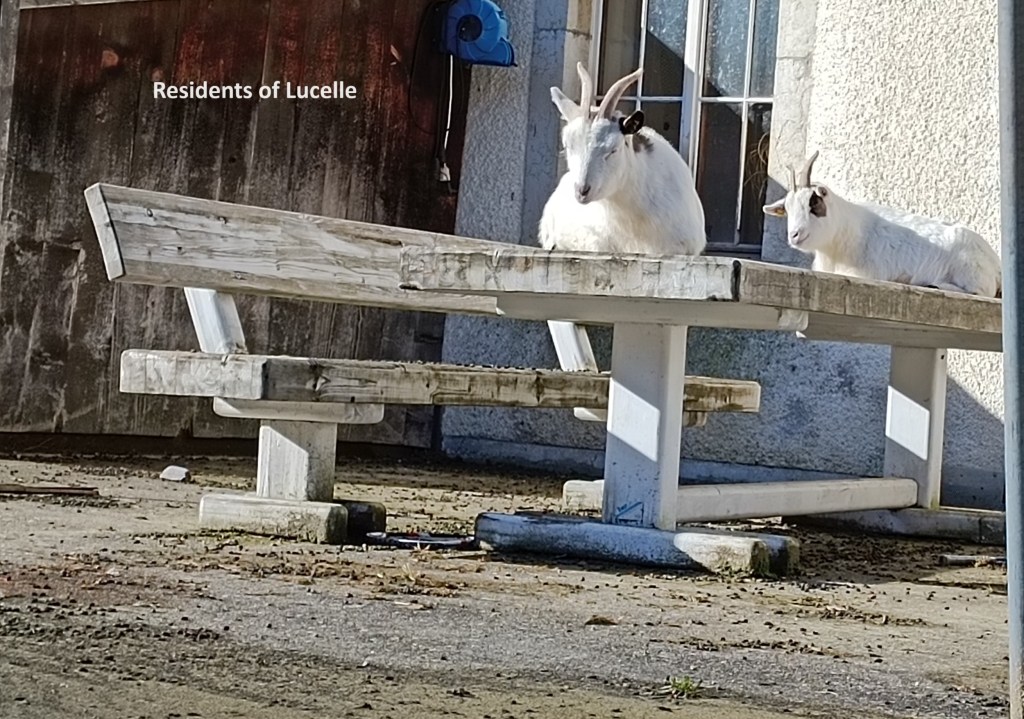
In Lucelle itself, I was met by two local residents happily sunning themselves in the afternoon warmth. They didn’t seem to mind my presence as I waited for the bus to start the journey back to Basel.
My step count for the day was 36,648.


